İbrahim Varlı There is not a single corner of the globe untouched by the intensifying global struggle for power. In this battle for hegemony—a phenomenon unique to the 21st century, where the historical process has accelerated and centuries of developments are being crammed into mere decades—fronts, alliances, allies and everything else are being reshaped. In our region, the Middle East and Eurasia, it is impossible to keep up with the pace of developments.
Almost every day, a new crisis or tension arises. It is worth stating this from the outset. At this moment in history, none of what is happening is either a coincidence or a surprise.
If one takes a step back and looks at the bigger picture, it becomes clear that these issues are interconnected, like the links in a chain. THE RETURN OF 19TH-CENTURY IMPERIALISM! To understand what is happening, one must look at the loss of power experienced by American imperialism.
The US under Trump, which has brought back 19th-century ‘classical’ imperialism, is making moves to reclaim what has been lost, halt the loss of power, and ‘make the country great again’. The rise of China, the emergence of the Global South, and the US’s loss of resources are turning this situation into a matter of survival for Washington. American imperialism is waging a battle for survival.
WHAT THE NATIONAL SECURITY STRATEGY REVEALS The new National Security Strategy, released on 4 December 2025, explicitly sets out how the world’s foremost imperialist power intends to maintain its global supremacy and what measures it believes are necessary to do so. The strategy document not only sets out a roadmap for what the US believes it must do and why; it also states its underlying assumptions with unusual candour. Its central propositions can be summarised as follows: · The US needs a coherent strategy to preserve its position as the world’s dominant economic and military power.
· Post-Cold War American strategies failed to define clear objectives and establish meaningful priorities. · US elites wrongly assumed that the American public would indefinitely accept the costs of global commitments with no apparent connection to the national interest. · Allies were allowed to shift their defence costs onto the American people and draw the US into conflicts that mattered more to them than to Washington.
· No state should be permitted to achieve global or regional dominance on a scale that threatens US interests. · The US must preserve freedom of navigation along crucial sea routes and maintain an open Indo-Pacific. · It must also prevent an adversarial power from dominating the Middle East, its energy resources and its strategic chokepoints.
WHAT THE PENTAGON’S DEFENCE DISCOURSE REVEALS Shortly after the National Security Strategy document, on 23 January, the National Defence published by the Pentagon reinforced these observations. This document, which effectively serves as a justification for the transformation of the Department of into a ‘War Department’, embeds Trump’s ‘America First’ strategy into military doctrine, thereby mapping out imperialism’s military roadmap. The Pentagon’s strategy also set as its objectives greater burden-sharing amongst allies, deterring China in the Indo-Pacific region through the use of force, revitalising the defence industry, and asserting dominance over the Western Hemisphere.
THE CORNERSTONES OF AMERICAN STRATEGY We are currently bearing witness first-hand to the outcomes of American imperialism’s military-political orientations. As ‘Pandora’s box’ is opened in the blood-soaked Middle East, a series of interlinked developments are unfolding. Eliminate those who refuse to submit by force: Whilst the US and Israel are subjecting the Middle East to a bloody transformation, they are also attempting to remove Iran, the most significant obstacle to these plans, from the equation through war.
Washington, grappling with Iran’s resistance, has most recently launched the greatest financial attack in history against that country. The war against Iran will not be brought to an end; it will be protracted. Lock the door on organisations, invest in regimes: As Professor İlhan Uzgel has also emphasised, the door has been shut on organisations in the Middle East.
The US has now decided to move forward not with the organisations it used until recently, but with ‘strong regimes and leaders’. The rise of Hay’at Tahrir al-to the power the dissolution of the Syrian Democratic , the PKK laying down its arms, the targeting of Hamas and Hezbollah, and the threatening of the Hashd al-Sha’abi are all interconnected. The relationships forged with Erdoğan, Colani, Sisi and other leaders are a product of this climate.
Shift the military-economic burden onto allies: As emphasised in both documents, the US has begun to shift the burden of those regions onto its allies. NATO has been ‘entrusted’ with Europe; the Middle East with Turkey and Sunni countries; and the Asia-Pacific with South Korea and Japan. The US has also established a system of new alliances and pacts across all these regions.
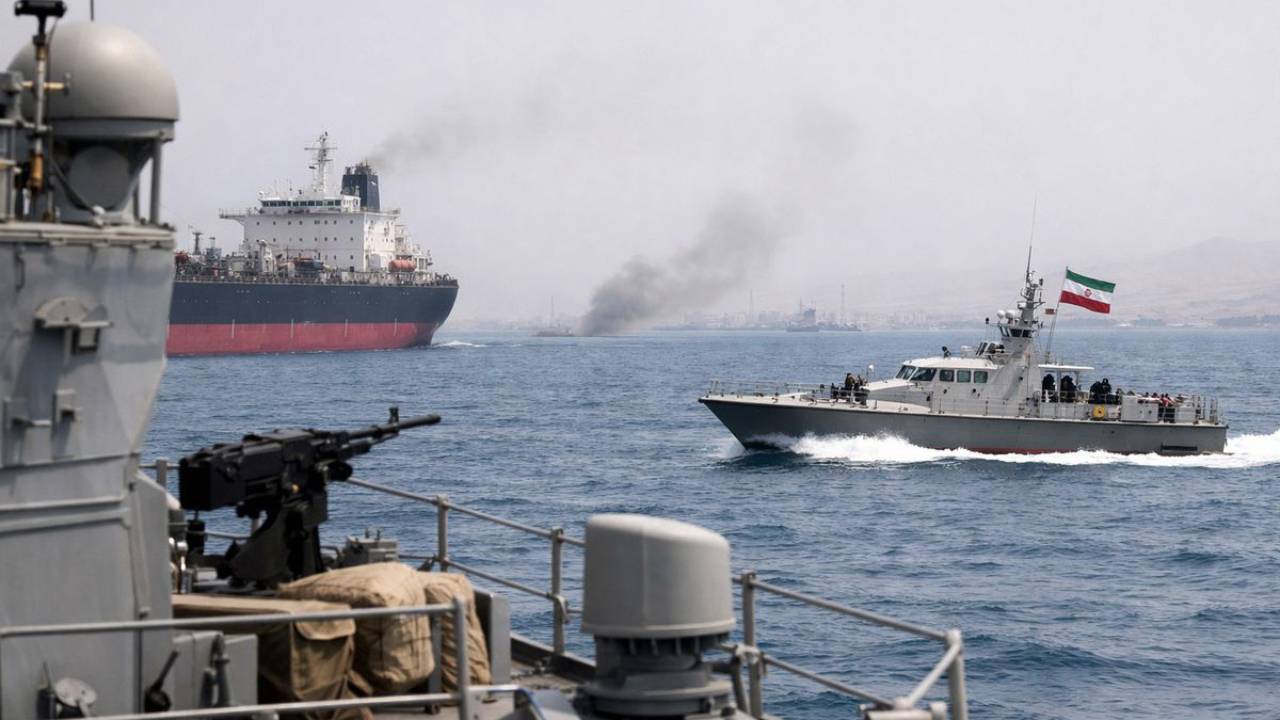
Control maritime trade routes: Another of America’s key strategies centres on controlling maritime trade routes, wherever they may be. It is noted that keeping these routes under US control is a “vital” matter. This is also the reason why the Strait of Hormuz is accorded such importance.
SYRIA, TURKEY, ISRAEL, THE KURDS: THE CHILDREN IN THE PLAYGROUND Within the framework of all these imperialist strategies, the war against Iran, the developments in Turkey and Syria, and the conflicts in the Middle East all fall into place. Whilst American imperialism sets up a multi-faceted game, this also results in multi-dimensional outcomes—some controlled, others uncontrolled. Here too, American imperialism comes into play once again.
The Turkey–Israel tension is one such example. Previously, a similar tension had arisen between Turkey and the Hay’at Tahrir al-leadership on the one hand, and the Syrian Democratic on the other. On 18 October 2019, Trump would liken the tension between the SDF, Hay’at Tahrir al-Sham and Turkey to children fighting in a school playground.
Following his meeting with Erdoğan, Trump would say: “What I did was extraordinary; I let them fight for a while, like children in a school playground, and then I separated them.” On 2 October 2024, the same Trump would use a similar analogy for the Israel–Iran tension, likening the two countries to “children fighting in a school playground”. THE ISRAEL–TURKEY TENSION AND THE US’S GAME Trump and the American administration, who know no bounds when it comes to imperialist arrogance, are rearranging the pieces once again and, just as in the Israel–Turkey crisis, are able to capitalise on the rivalry between their allies. Both Netanyahu and Erdoğan, who have lost domestic legitimacy in their respective countries, are feeding off this high-tension standoff as they escalate the conflict against one another.
It is worth looking at the Israel–Turkey tension, which has dominated the headlines in recent days, through this lens as well. Note: This article is translated from the original article titled Amerikan stratejisi ve ‘okul bahçesinde kavga eden çocuklar’, published in BirGün newspaper on August 26, 2026.