Headscarf crisis between one nation, two states
Politics Service Following the Azerbaijani government’s regulations on dress codes in schools, efforts are being made to resolve the crisis that has arisen between Ankara and Baku. Against the backdrop of tensions...
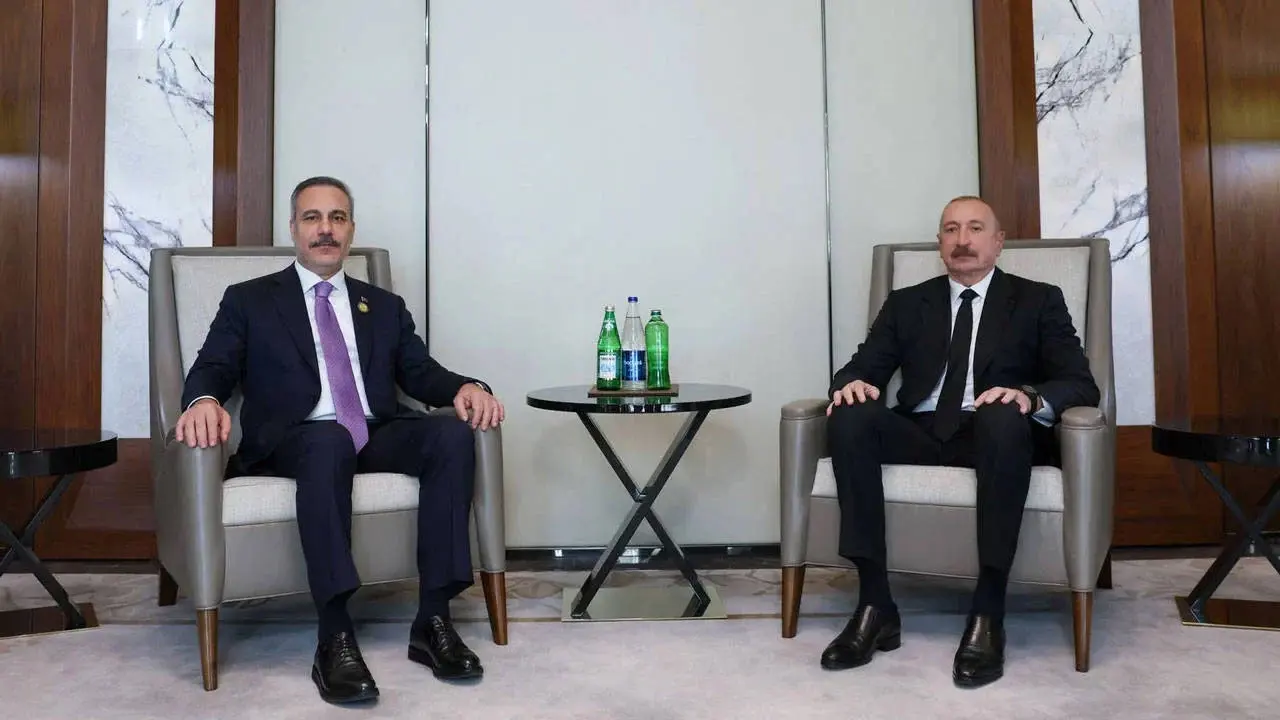
Politics Service Following the Azerbaijani government’s regulations on dress codes in schools, efforts are being made to resolve the crisis that has arisen between Ankara and Baku. Against the backdrop of tensions sparked by the AKP and those close to the Presidential Palace criticising Baku whilst defending the headscarf for girls, Foreign Minister Hakan Fidan travelled to Azerbaijan. Fidan, who met with Aliyev in Baku whilst attending the Conference on Cooperation and Confidence-Building Measures in Asia, made a statement regarding the strained relations between the two countries.
Fidan said, “We are an ancient nation. We sit down and discuss our own issues in a civilised manner, as befits our ancient history.” IN THE SAME PHOTO WITH HERZOG Fidan appeared in the same group photo with Israeli President Isaac Herzog at the summit he attended; however, whilst Herzog was delivering his speech in the hall, he joined other leaders in a protest and left the meeting. Fidan subsequently announced that he had met with Aliyev, explaining that they had discussed “the transformation of differing views into a propaganda tool on social media”.
TENSIONS BETWEEN THE AKP AND THE YAP On 12 October, Oktay Saral, the President’s Chief Adviser, posted a message criticising the headscarf policy, stating, “The headscarf is not an obstacle; it is a requirement of faith.” Members of the AKP and reactionary media outlets also reacted negatively to the policy in Azerbaijan. The New Azerbaijan , led by Aliyev, claimed that certain media outlets in Turkey were “publishing information that is contrary to the truth and biased”. In its statement, the YAP argued that Saral and AKP members had made “populist and irresponsible” remarks without taking into account Azerbaijan’s constitutional structure and the legal framework regarding freedom of religion, It was emphasised that the phrase “One nation, two states” between Turkey and Azerbaijan could not serve as a pretext for one state to interfere in the internal affairs of the other or to impose its own political and ideological approach.
BAHÇELİ TAKES AZERBAIJAN’S SIDE In the tension that erupted between the AKP and circles close to the party in Turkey and Baku over the “headscarf” issue, MHP Chairman Devlet Bahçeli chose to side with Azerbaijan. In a statement he issued, Bahçeli said: “Each Turkish Republic is an independent and sovereign state in its own right. From the Aegean to the Caspian, from the past to the future, Turkey and Azerbaijan are two powerful states within the same heartland.
It is of the utmost importance to act on the basis of common sense, mutual understanding and collective wisdom in the face of any approach aimed at undermining the bonds of brotherhood between the two countries.” Note: This article is translated from the original article titled Bir millet, iki devlet arasında başörtüsü krizi, published in BirGün newspaper on October 16, 2026.